Back to work

Growing Going Merry from 5,000 to 125,000 students in under a year.

RoleHead of Growth Product
CompanyGoing Merry
Team5 people
TimelineJun 2018 – May 2019
User Research Focus Groups Journey Mapping Wireframing Prototyping Growth Design Design Leadership Product Strategy Product Management
Going Merry

Going Merry had a powerful idea and a shrinking runway. Millions of scholarship dollars go unclaimed every year because students don't know they exist, and the platform to connect them was barely functional as a product. I joined as the only designer with a public school background and deep ties to the education community, and had less than ten months to prove the idea had legs. Through a non-linear mix of research, growth design, and rapid experimentation, we took the platform from 5,000 to over 125,000 active students and millions of dollars in scholarships awarded. Going Merry was acquired by Earnest in 2021.

A brilliant idea with less than a year to prove it.

Millions of scholarship dollars go unclaimed every year. Not because students don't need them. Because students don't know about them, and the process of finding and applying is genuinely exhausting. Going Merry was built to fix that.

The product existed. A manually assembled scholarship database, transcribed from PDFs and documents, presented through a basic web app. Useful in concept, but rough at the edges. No personalization, no growth hooks, no real reason to come back after your first visit. Seed funding was running out. The runway was under ten months. The company needed active, engaged users fast enough to show investors the idea was real.

I joined as the only member of the team with a public school education and direct ties to the communities Going Merry was trying to reach. That context mattered more than any framework.

Talking to the students nobody else was talking to.

Before touching the product, we ran focus groups at inner-city Philadelphia public high schools. With students. With counselors. With the people this thing was actually for.

We wanted to know what they understood about scholarships, what they planned to do for college, what they might consider if they thought they could actually afford it. The conversations were genuinely affecting. Students who had written off college would shift when they understood that money they didn't know existed could change the math entirely.

A few things became clear quickly. Students didn't apply because the process felt impossibly hard. They didn't share scholarships because it felt competitive. And most had no idea that scholarships existed for things as specific as their neighborhood, their sport, or their hair color. That specificity became the product strategy.

Activation, goal completion, then referral.

The growth strategy was built in three stages, each feeding the next. Getting students in the door was only valuable if they actually did something. And getting them to do something was only sustainable if it brought more students in.
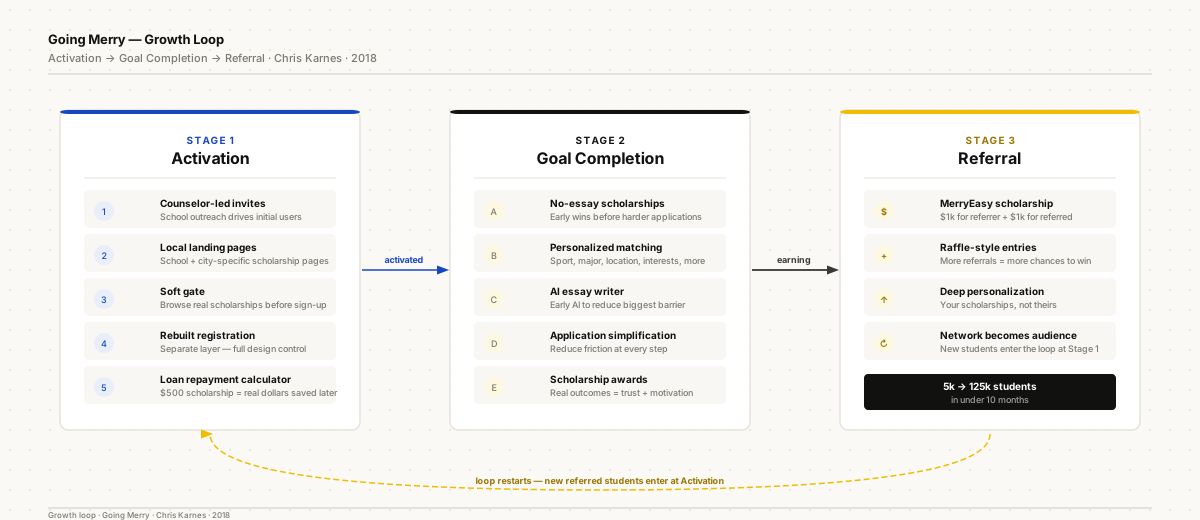
Activation
Counselor-led invites gave us a starting point, but the sign-up experience needed a complete rethink. We shortened the registration flow, rebuilt it on a separate layer for full design control, and led with value before asking for anything. Automated, school-specific landing pages showed local scholarships that the big aggregators didn't have. A loan repayment calculator made the math real: even a $500 scholarship could save thousands in interest later.
Goal completion
Scholarship applications can be paralyzing. Essays, references, transcripts. So we introduced the no-essay scholarship category, inspired by LinkedIn's Easy Apply. Students could rack up real wins on the platform before tackling anything hard. Deep personalization followed: scholarships matched to location, neighborhood, sport, planned college, field of study, and yes, things like hair color (scholarships for redheads are real and funded). An early AI essay writer removed the biggest remaining barrier.
Referral
Referral in a scholarship context is counterintuitive. Nobody wants to invite a competitor for money they're trying to win. We addressed it two ways. First, personalization so deep that no two students' scholarship feeds looked the same, making the competitive threat feel smaller. Second, the MerryEasy scholarship: a Going Merry-funded $1,000 award for anyone who referred, and another $1,000 for whoever they referred. More referrals earned more raffle entries. The program brought students in, and then the loop started again.
Going Merry growth loop diagram

The growth loop: Activation to goal completion to referral, and back to the start

The two calls that shaped everything.

The soft gate: show scholarships before asking for an account
Standard product thinking says gate everything — get the sign-up first. I pushed back. Students who arrive at a Going Merry landing page and immediately hit a registration wall have no reason to trust us. But students who can browse real local scholarships before creating an account? They already know the platform is worth their two minutes. The soft gate let us build trust before we asked for anything. It became one of the most effective activation levers we had.
Build registration outside the core app
The core application had limitations. Small engineering team, limited front-end expertise, no time for a full rebuild. Rather than fight those constraints, I proposed building the registration experience on a separate layer of the application entirely. This gave us full design control and the ability to test and iterate the sign-up funnel independently of the product. It also gave engineering a cleaner reference for improving what they could inside the core app. We shipped a significantly better first experience without touching the infrastructure that would have taken months to change.

What we built.

Everything shipped inside a ten-month window with a team of five. The output was more than screens — each piece fed into the growth loop.
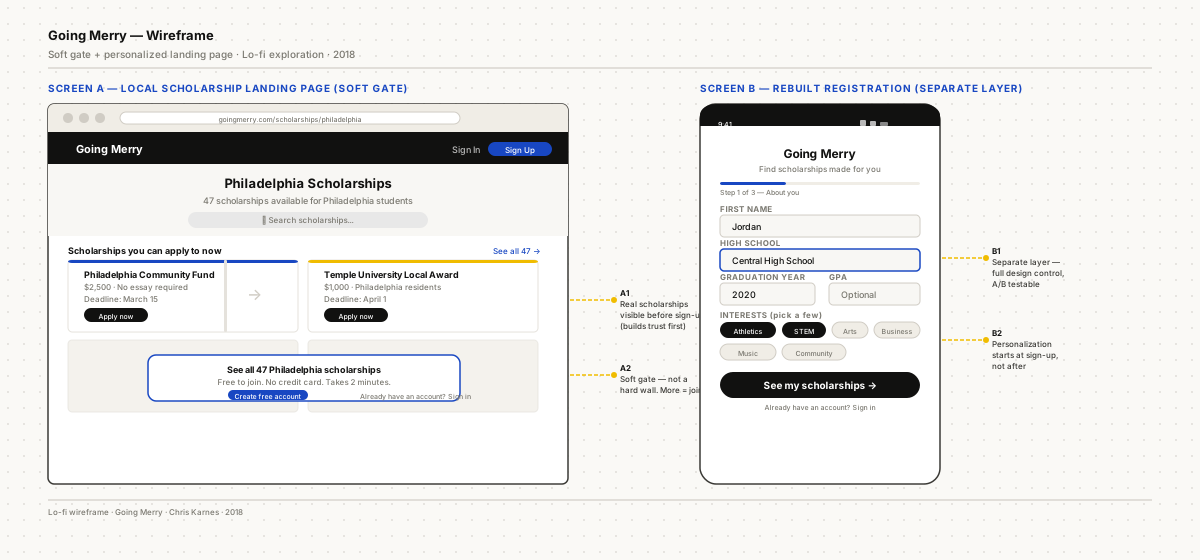
Going Merry wireframes - soft gate and registration

Lo-fi wireframes: the soft gate landing page and rebuilt registration flow
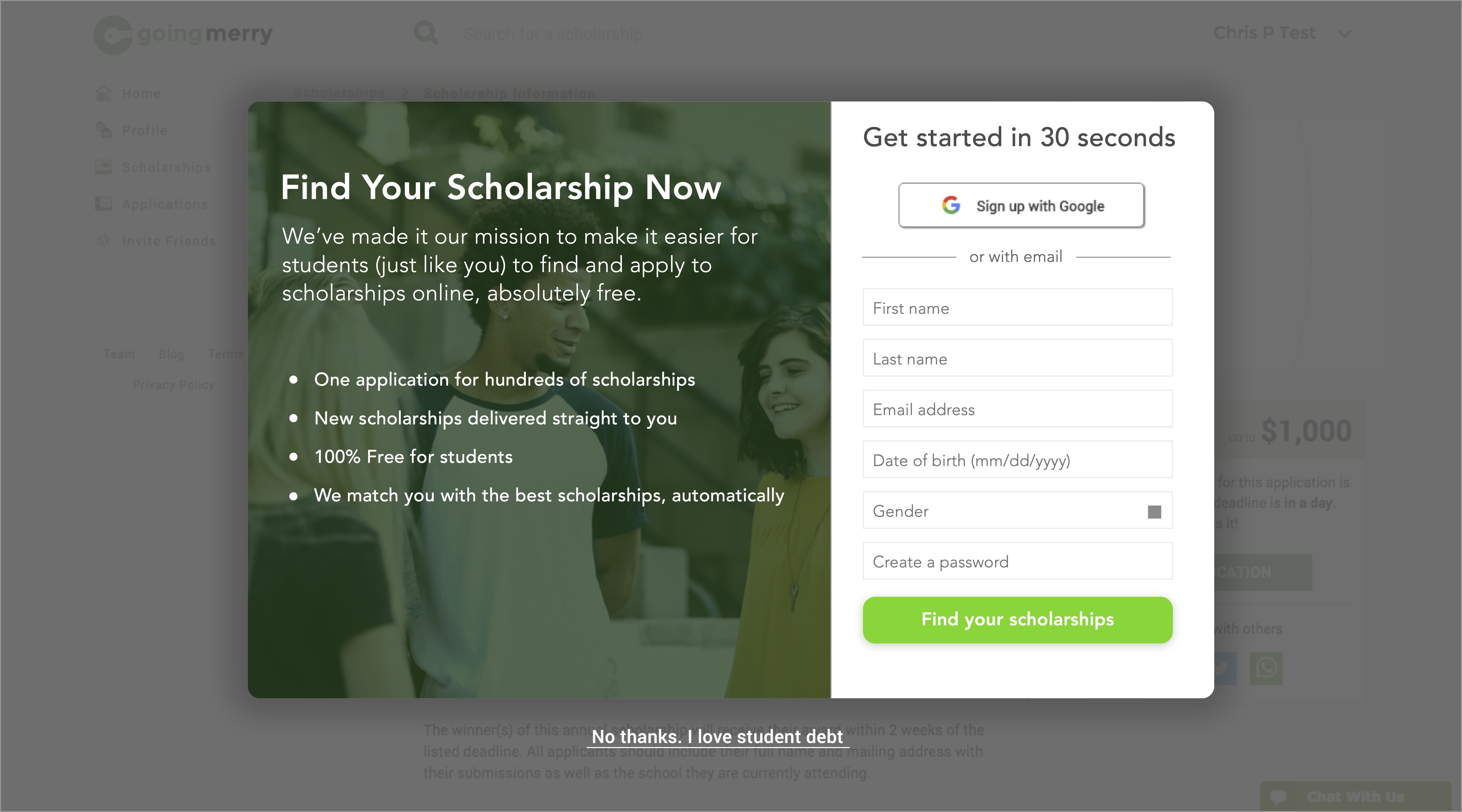
Going Merry soft gate

Soft gate in production — real scholarships visible before sign-up
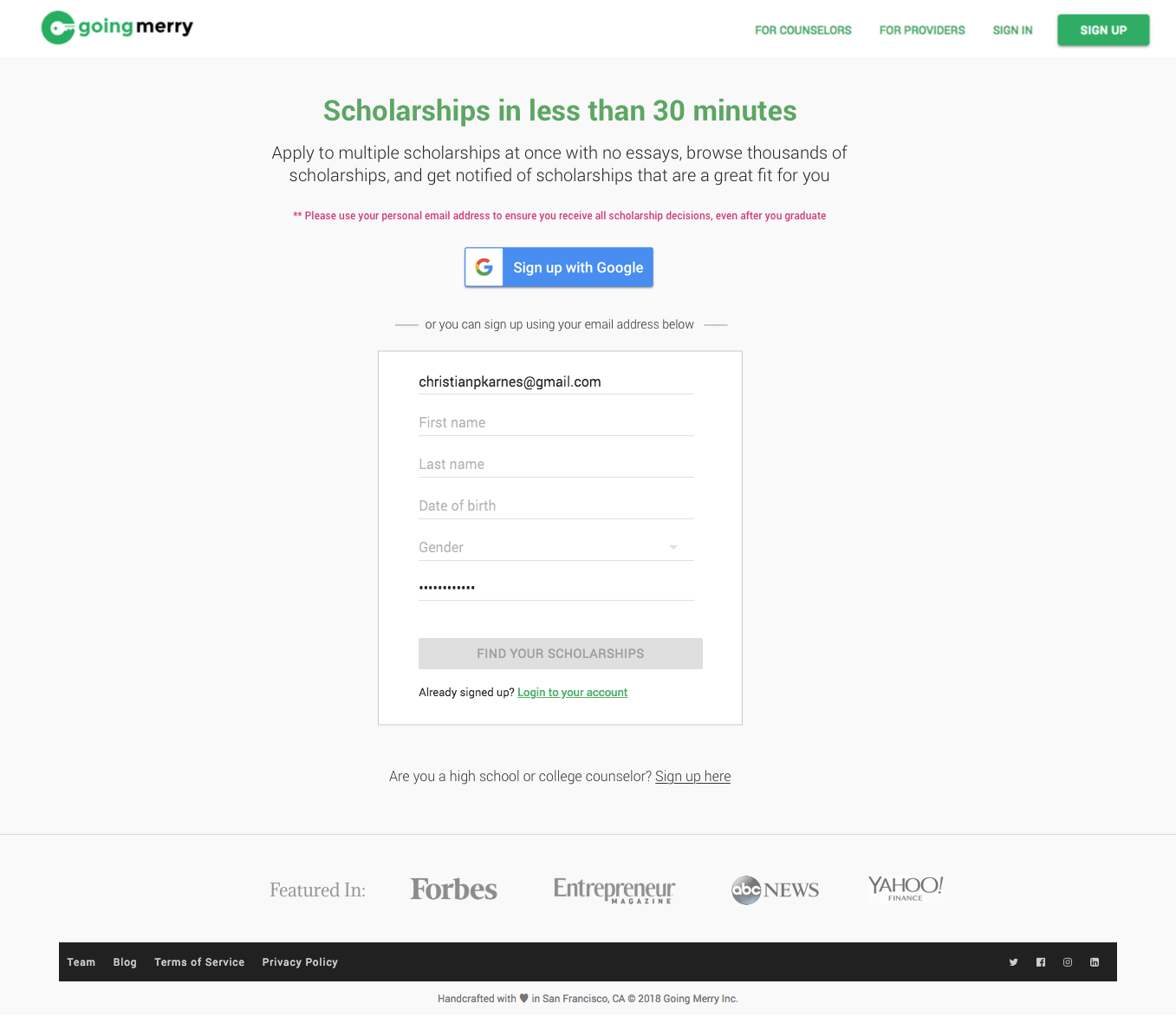
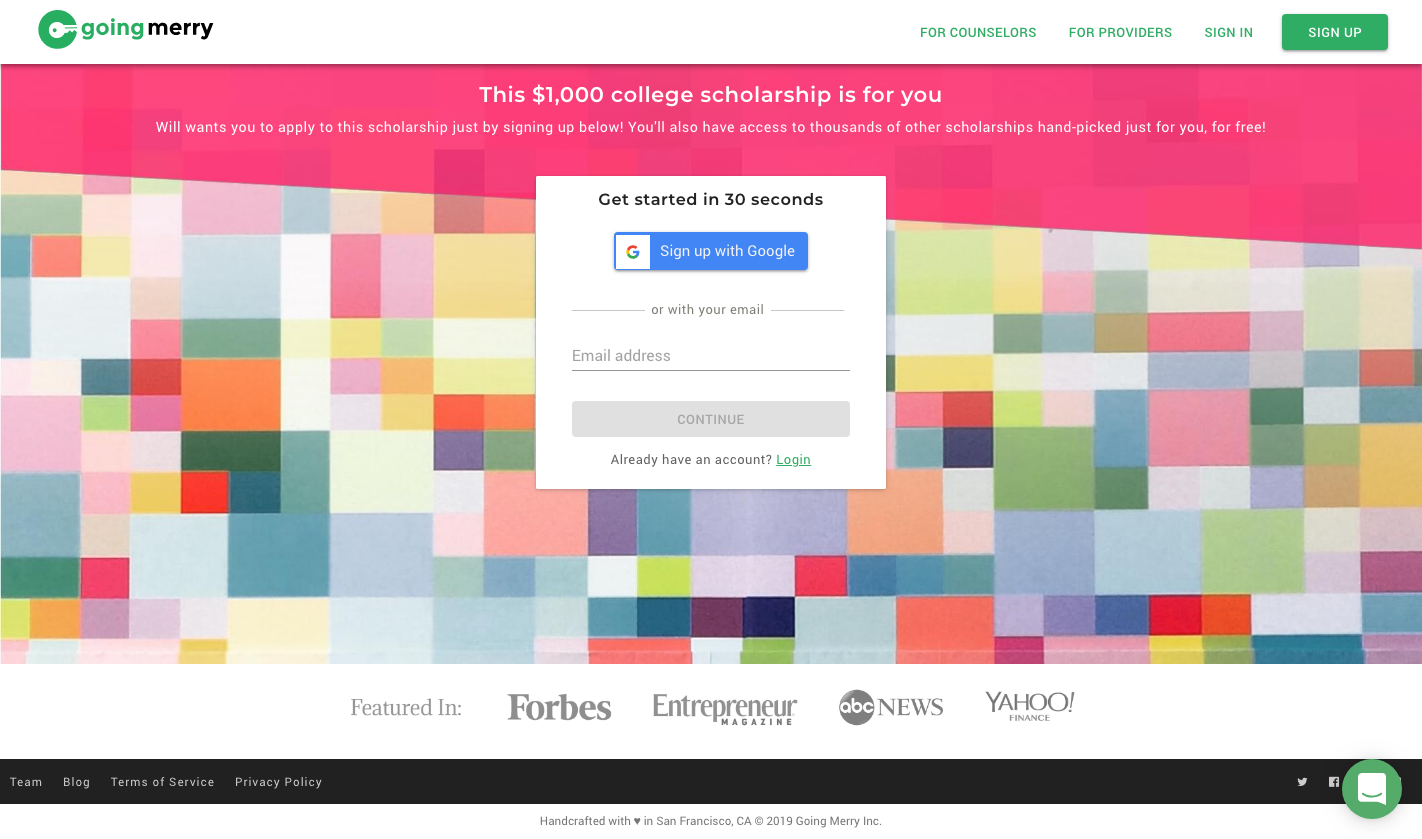
Going Merry general landing page

General landing page — built to show value before sign-up
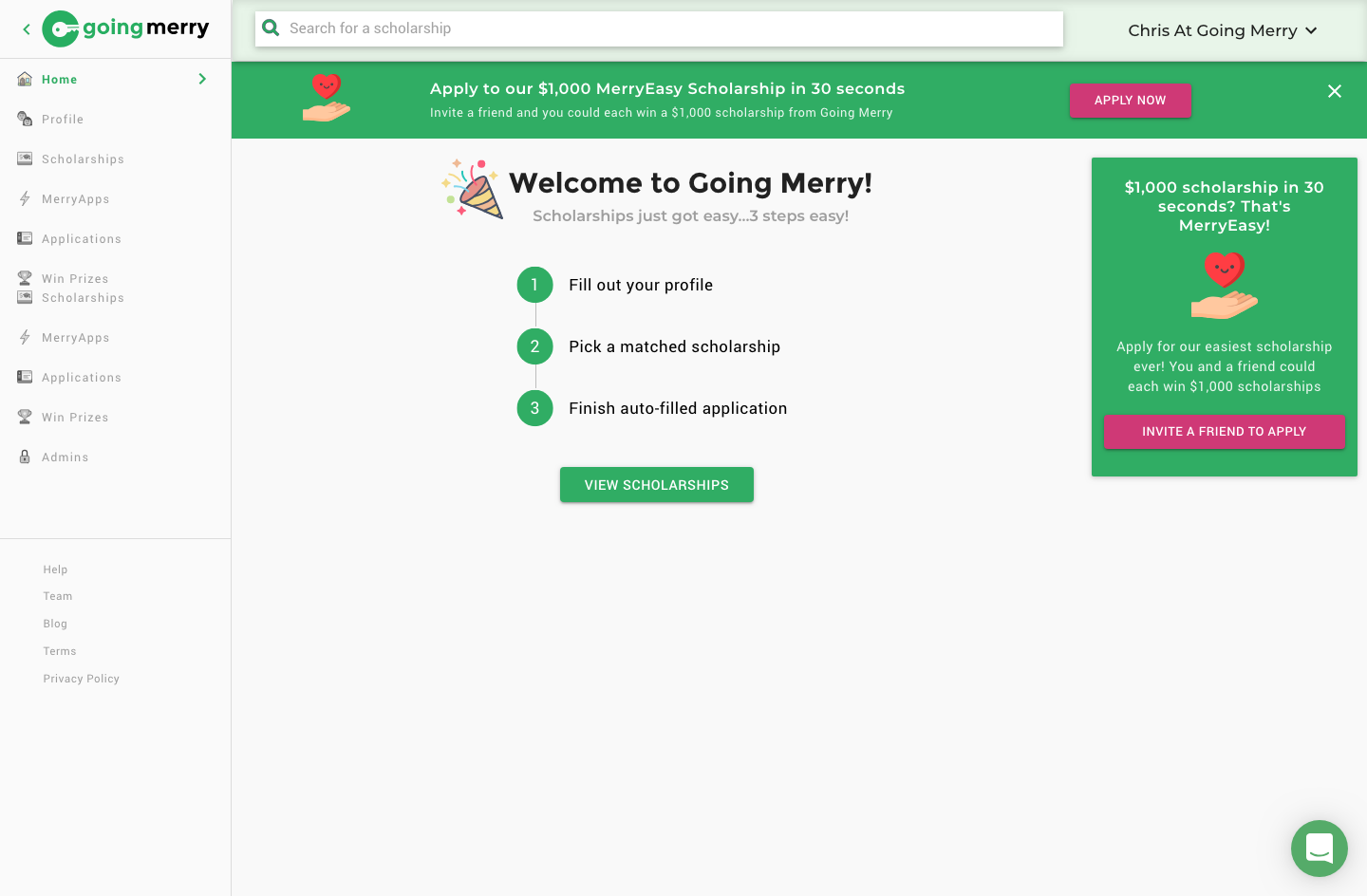
Going Merry app home

App home with personalized scholarship feed
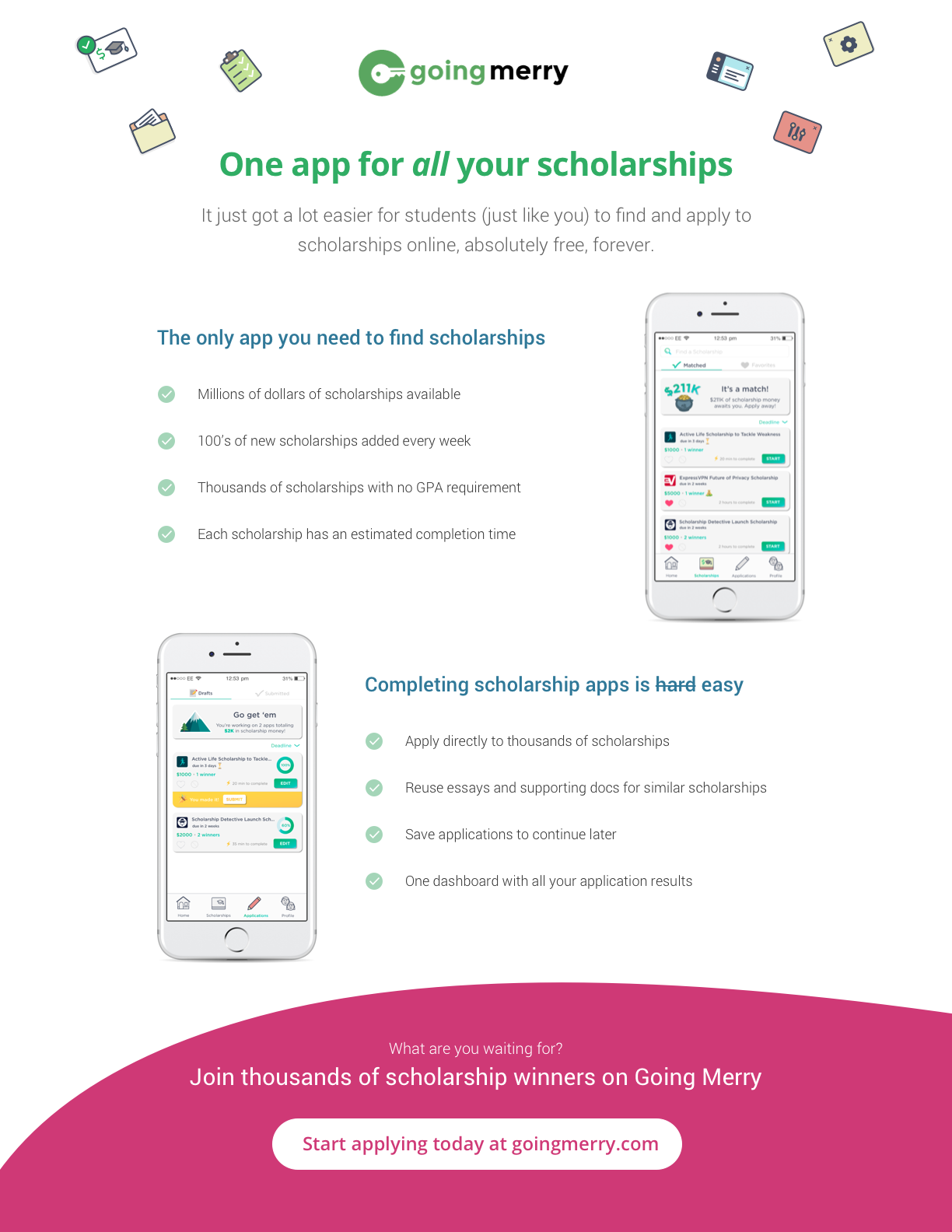
Going Merry student profile

Student profile summary — personalization at the core of the experience
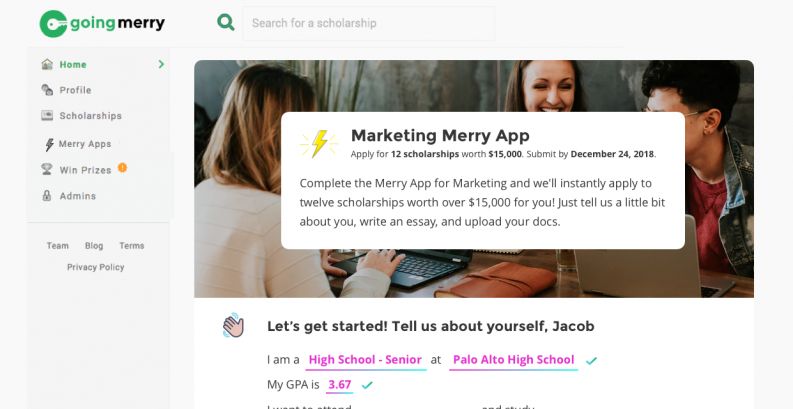
Going Merry mobile app

The mobile experience — scholarships matched to who you are

25x growth. Millions awarded. Eventually acquired.

In under ten months, the platform grew from 5,000 to over 125,000 active students across the country. More importantly, millions of dollars in scholarships reached students who wouldn't have found them otherwise. That was the point.

The things that shipped: a rebuilt registration experience, personalized landing pages at school and city level, no-essay scholarship categorization, a scholarship and loan repayment calculator, an early AI essay writer, and a significantly updated in-app experience built around personalization and matching.

Going Merry was acquired by Earnest in 2021.

25x
Student growth
125k
Active students
<10
Months to get there
$M+
Scholarships awarded
From 5,000 to over 125,000 engaged students in under ten months. Millions of dollars in scholarships awarded to students who needed them. The company was acquired by Earnest in 2021.
Next project
LifeLens: Designing for high-stakes decisions in the field