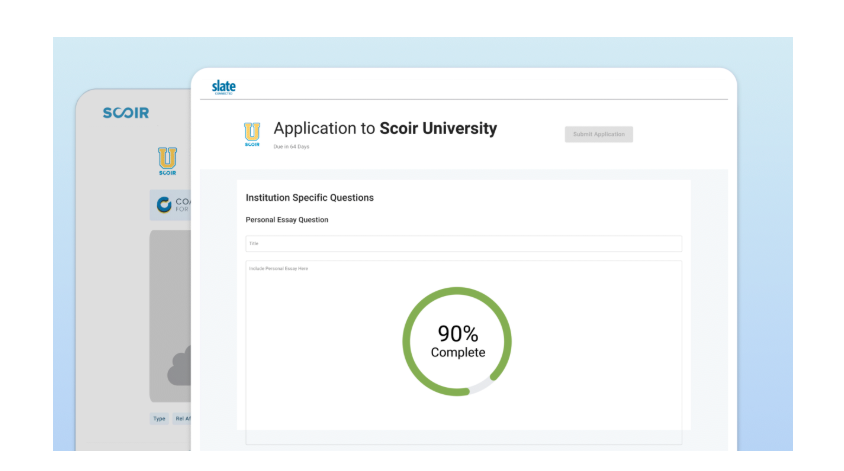
A partnership built to expand who gets to apply.
Scoir is a college and career discovery platform used by thousands of high schools. Most of the product is built around an existing relationship — counselors guiding students, schools connected to the platform. But a lot of students don't have that. No engaged counselor, no school on Scoir, no money for application fees.
The Coalition for College Access came to Scoir with a chance to reach exactly those students. If we could build the right product, we could give any student a free path to apply to colleges not on Common App — regardless of whether they'd ever heard of Scoir before. The deadline was August 1. We had eight months.
Research first, even on a tight timeline.
Eight months is tight, and the fastest way to spend it badly is to start drawing. I protected research time at the front of the schedule — partly because the students this was built for deserved better than a product built on assumptions, and partly because I knew I'd need evidence to win the argument I could see coming about architecture. Research wasn't the discovery phase. It was how I got the room to agree.
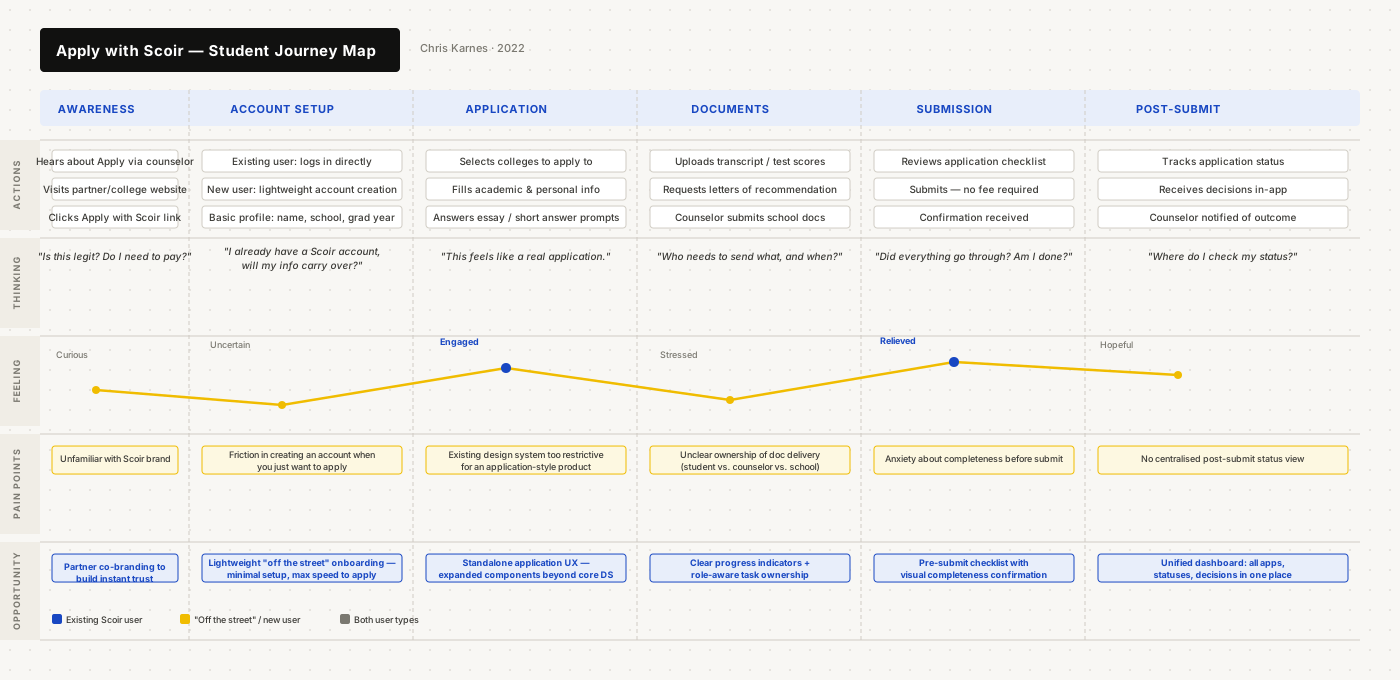
Student journey map — from first awareness through post-submission, across two user types
An application that felt like an application.
The most important early framing decision: this wasn't a feature inside Scoir. It was a standalone product that happened to live inside Scoir — and it needed to feel that way, especially for students arriving from a partner site who had never heard of Scoir before.
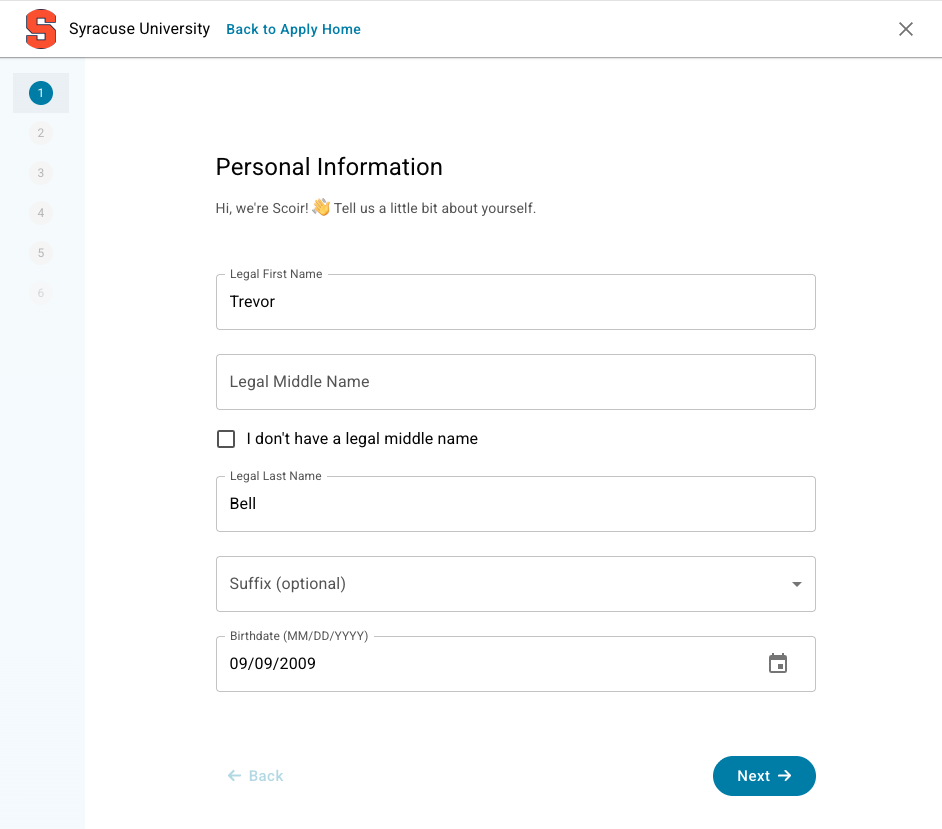
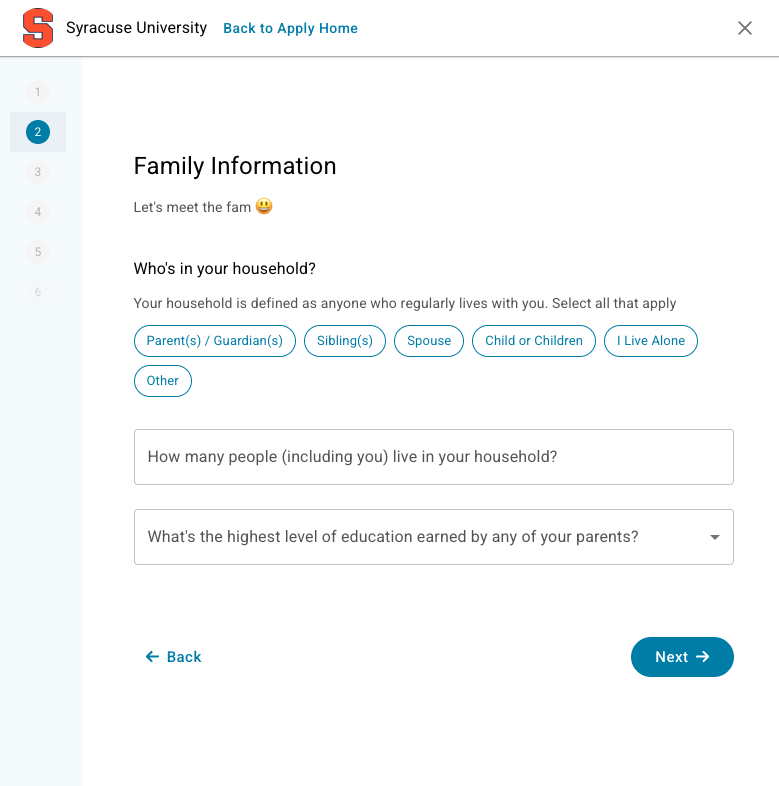
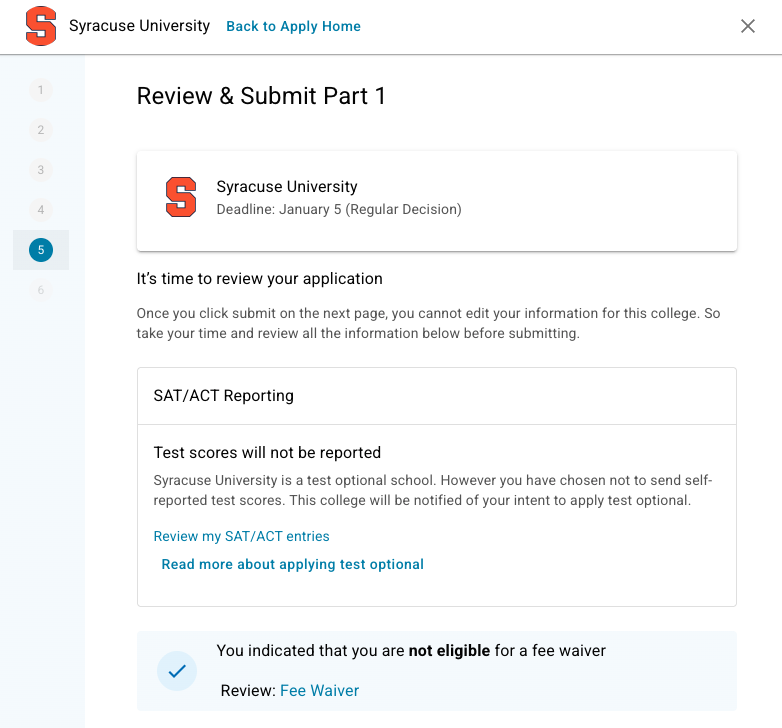
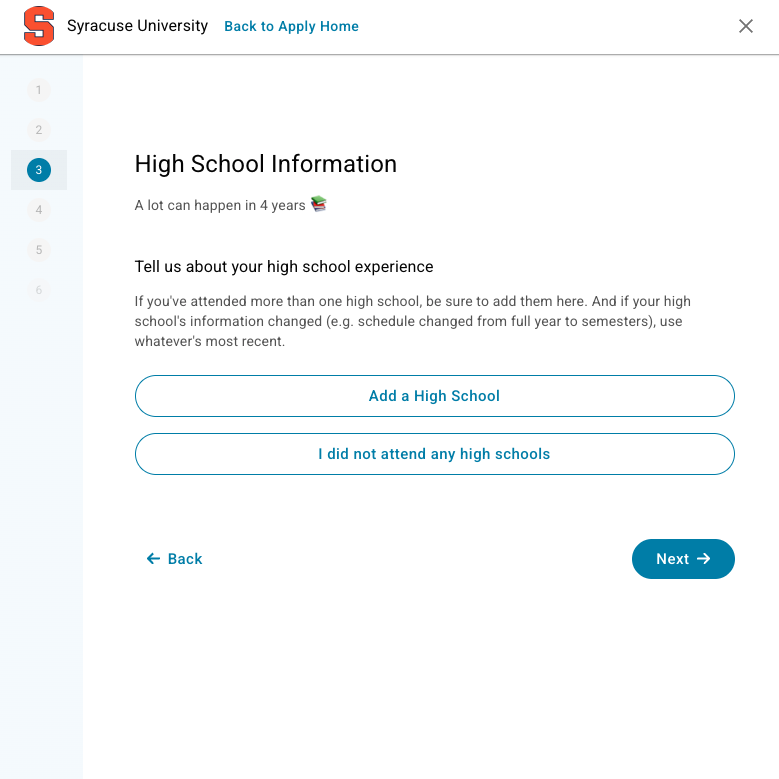
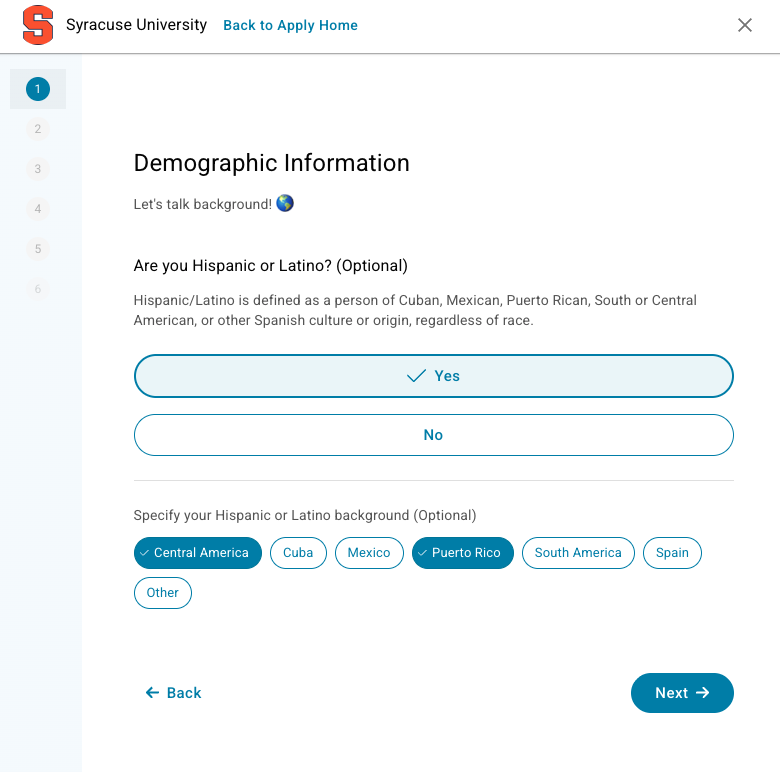
Animated walkthrough — the full application experience end to end
For existing Scoir users, the application connected directly to their profile — their data carried over automatically so they could go from college discovery to applying without starting over. The mobile and broader platform views below show how Apply sits within the product for that user type.
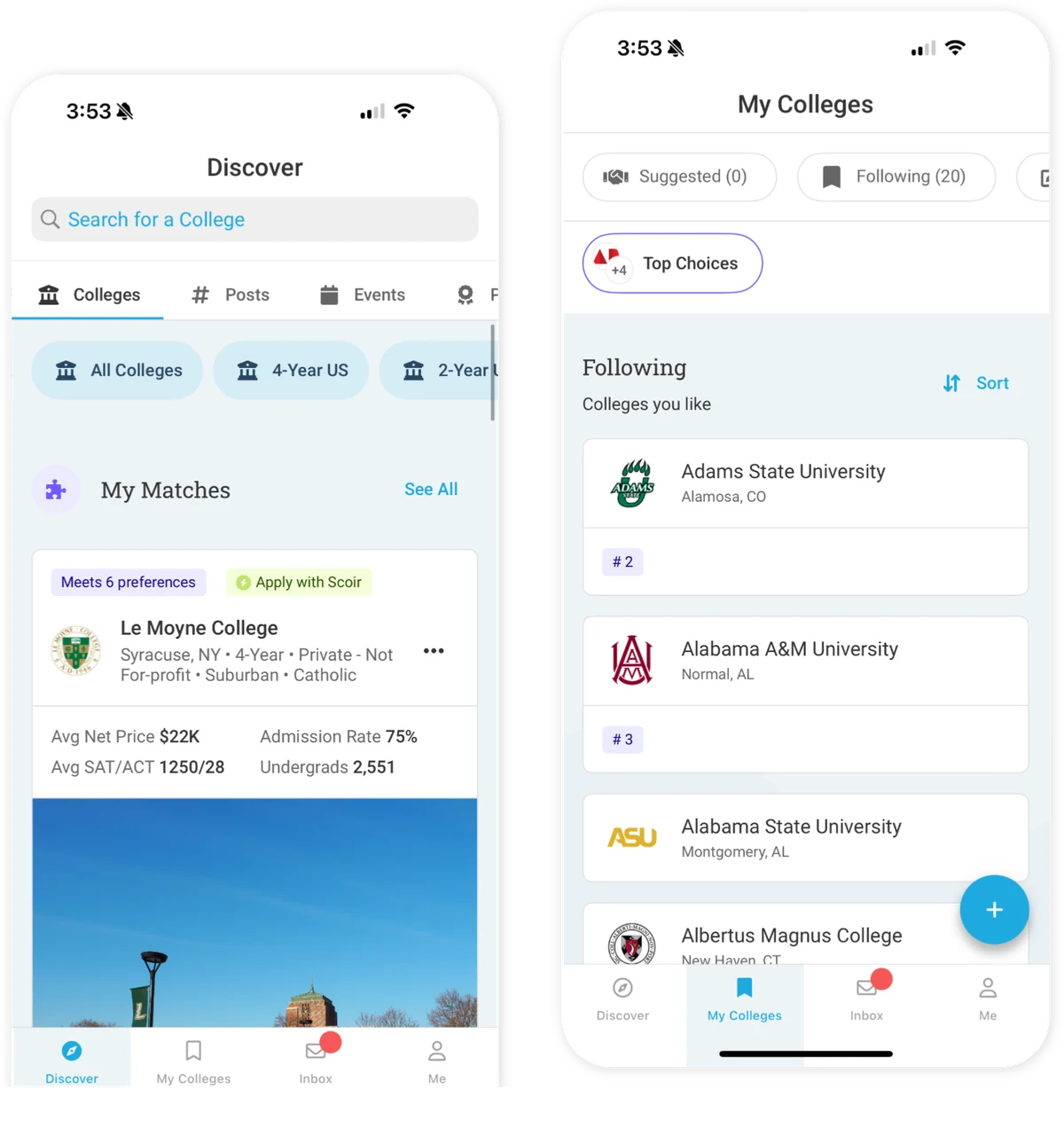
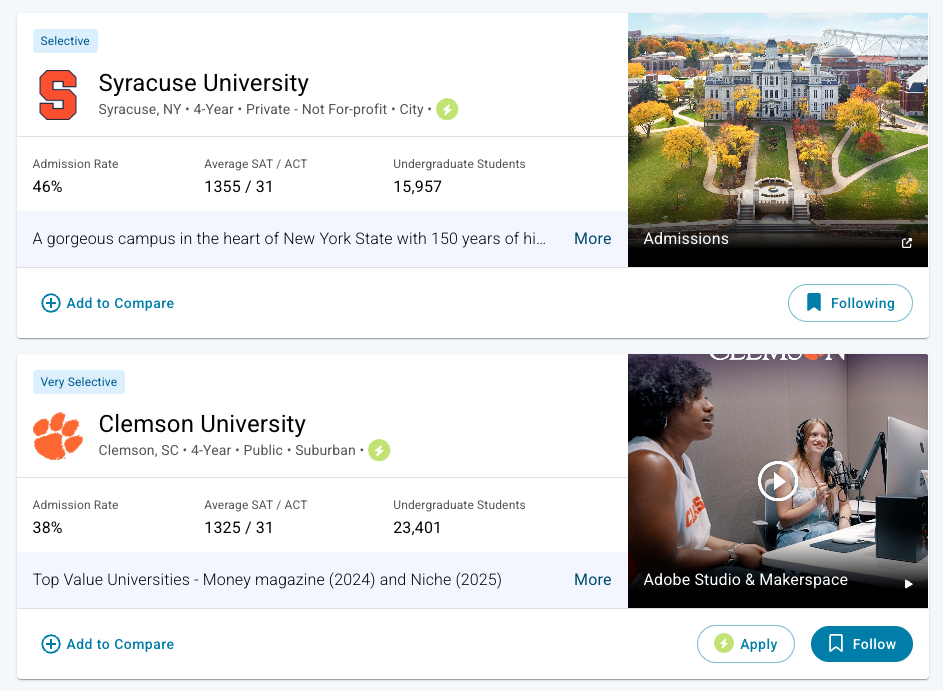
Apply with Scoir on mobile and within the broader platform
The argument for standalone — and the compromise that worked.
150,000 students. 500,000 applications.
We hit the August 1 deadline. The numbers came back fast, and they settled the argument.
In year 1, 65% of students who applied were not existing Scoir users — exactly the population this was built for, coming in cold through partner links. Had we gated it, that's the two-thirds of the product's audience we'd have lost at the door. I'd rather be able to point at a number than at a rationale, and this is the number.
The back-end built alongside the application (document uploads, recommendation requests, delivery to 181 colleges) was just as significant as the front-end, even if it's less visible. Getting the right documents from students, counselors, and teachers to colleges — reliably, at scale — was the harder problem, and it shipped.